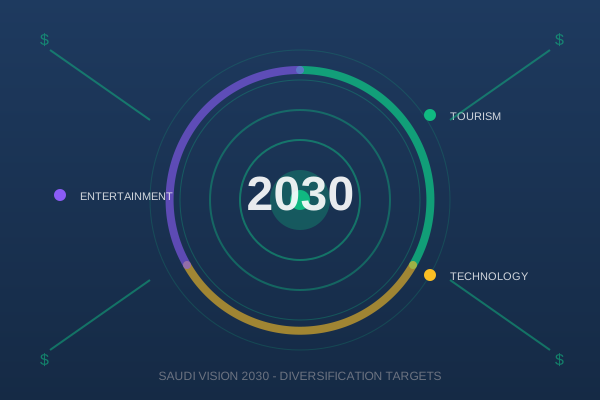
Vision 2030 represents the most ambitious economic transformation program in the Middle East's history. For international investors, understanding how to participate—and where opportunities genuinely exist—requires moving beyond the headlines to examine specific sectors, structures, and risk factors.
The Scale of Transformation
The numbers are staggering: trillions of dollars in planned investment across tourism, entertainment, technology, renewable energy, and infrastructure. Giga-projects like NEOM, the Red Sea Project, and Qiddiya are creating entirely new industries and destinations.
But scale alone doesn't guarantee investment returns. The key questions for investors are: which sectors offer genuine opportunity, what structures enable participation, and how do risk factors compare to alternative deployments?
Priority Investment Sectors
Tourism and Entertainment: Saudi Arabia is building a tourism industry essentially from scratch. For investors with hospitality expertise, this creates opportunities in hotel development, leisure assets, and tourism-adjacent services. The risk-return profile favors those who can add operational value beyond pure capital.
Technology and Digital: The Kingdom is actively cultivating a technology ecosystem, with particular focus on fintech, e-commerce, and enterprise software. Government procurement preferences for local solutions create demand, while regulatory reforms are improving the environment for startups and investors alike.
Renewable Energy: Ambitious sustainability targets are driving massive investment in solar, wind, and green hydrogen. For investors with energy transition expertise, Saudi Arabia offers scale, solar resources, and government commitment that few markets can match.
Healthcare: Population growth, changing demographics, and privatization of healthcare services create sustained demand. Opportunities span from hospital operations to medical technology to pharmaceutical manufacturing.
Structural Considerations
Investing in Saudi Arabia requires navigating specific structural factors:
- Local Partner Requirements: While foreign ownership rules have liberalized significantly, certain sectors and activities still require local partnerships or specific licensing
- PIF as Co-Investor: The Public Investment Fund is an active co-investor across priority sectors. Understanding how to work alongside PIF can be advantageous
- Regional Headquarters Program: Government requirements for regional headquarters create operational considerations for international firms
- Saudization Requirements: Labor nationalization policies affect workforce planning and operating costs
Risk Factors
Sophisticated investors should consider:
- Execution risk on giga-projects—timelines and budgets may shift
- Regulatory evolution as the market develops
- Competition for talent as multiple initiatives compete for skilled professionals
- Geopolitical factors affecting regional stability and investor sentiment
How to Participate
For investors considering Saudi Arabia exposure, our investor advisory team helps navigate these structures. Several approaches merit consideration:
- Direct investment in operating companies, potentially alongside local or sovereign partners
- Fund commitments to managers with Saudi-specific expertise and track records
- Public market exposure through the Tadawul, now accessible to qualified foreign investors
- Co-investment alongside Saudi family offices or institutions with aligned interests
Exploring Saudi Arabia Opportunities?
Blue Ridge Advisory helps investors understand and access Vision 2030 investment opportunities.
Schedule a Consultation